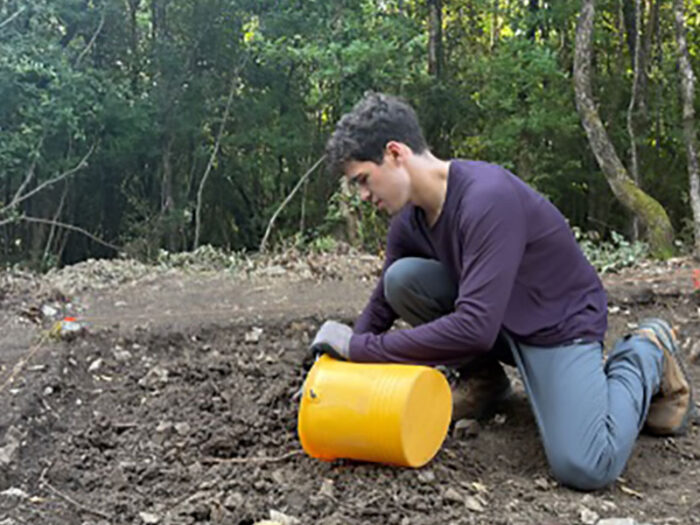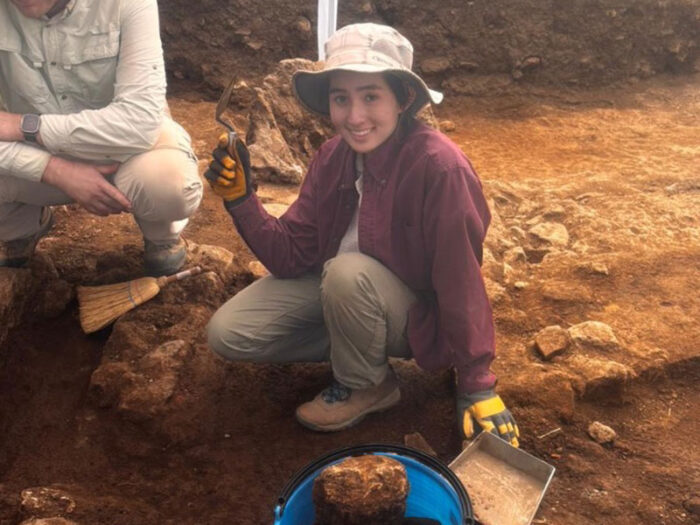


The Gabii Project is an international archaeological initiative launched in 2007 with the objective of studying and excavating the ancient Latin city of Gabii, a city-state that was both a neighbor of, and a rival to, Rome in the first millennium BC. Located in the region of Italy once known as Latium, the site of Gabii was occupied since at least the tenth century BC until its decline in the second and third centuries AD. In subsequent centuries the site was never developed or substantially occupied, nor has the urban area been the site of major stratigraphic excavations. The site provides a unique opportunity to study the development and structure of Archaic urban planning in Central Italy, both monumental and civic architecture, and domestic space. Since Gabii became part of the Roman Empire—first as a member of the Latin League and later as a municipium—numerous intersections exist between Gabii and Rome. The Gabii Project seeks to explore and understand the archaeology of Gabii and to contextualize it within the wider orbits of Central Italy and the Roman Empire, while also achieving a better understanding of Gabii’s urban development and its relationship with the other cities of Latium in antiquity.
Being able to dig at Gabii has made me realize that I am stronger than I think. And at the site I fall more and more in love with Gabii and archaeology everyday. It has been such a rewarding experience.